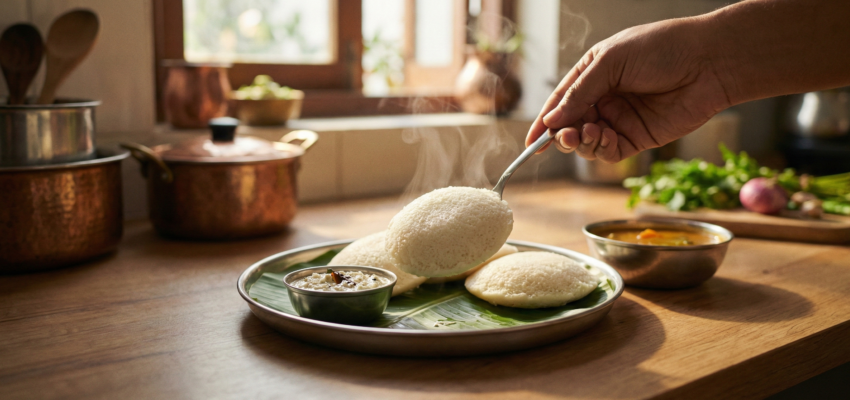
Idli is one of the most loved South Indian dishes known for its soft, fluffy, cloud like texture. It is light on the stomach, easy to digest, and perfect for breakfast, lunch, or even a light dinner. When eaten with hot sambar and fresh coconut chutney, idli becomes more than just a dish. It becomes comfort food that fits every mood.
The process of making perfect idlis may seem simple but achieving the right softness requires attention to detail. The soaking, grinding, fermentation, and steaming all play an important role in creating idlis that rise beautifully and feel soft to the touch. This article explains each step in detail so anyone can make hotel style idlis at home.
Ingredients You Will Need
For the Idli Batter
- 2 cups idli rice
- 1 cup urad dal
- 1 teaspoon fenugreek seeds
- Salt to taste
- Water as needed
For Steaming
- A few drops of oil for greasing the idli plates
For Serving
- Coconut chutney
- Sambar
- Idli podi
- Ghee optional
Step by Step Method to Make Perfect Soft Idli
Step 1
Wash and Soak the Rice and Dal
- Wash the idli rice two to three times until the water becomes clear.
- Wash the urad dal separately.
- Soak the rice and fenugreek seeds in one bowl with enough water.
- Soak the urad dal in another bowl.
- Let both soak for at least six hours. Longer soaking leads to better grinding and softer idlis.
Step 2
Grind the Dal to a Fluffy Texture
- Drain the soaked dal.
- Add small amounts of water gradually and grind until the dal becomes light, airy, and smooth.
- The batter should feel fluffy and thick.
- Transfer it to a large mixing bowl.
Good urad dal batter is the key to soft idlis.
Step 3
Grind the Rice
- Drain the soaked rice.
- Add a little water and grind until the batter becomes slightly coarse.
- The texture should resemble fine semolina.
- Transfer the rice batter to the same bowl that contains the urad dal batter.
Step 4
Mix and Ferment the Batter
- Mix the dal and rice batter gently using clean hands.
- Add salt and mix again.
- Cover the bowl and place it in a warm area for eight to ten hours.
- During fermentation the batter should rise and develop tiny air pockets.
- The smell should be pleasantly sour which means fermentation is successful.
If the weather is cold you can place the bowl in a warm oven or near the stove.
Step 5
Prepare the Steamer
- Add water to your idli steamer or pressure cooker.
- Grease the idli molds lightly with oil.
- Stir the fermented batter gently. Do not over mix or the air will escape.
- Pour the batter into the molds filling them three fourths full.
Step 6
Steam the Idlis
- Place the idli stand inside the steamer.
- Close the lid and steam for ten to twelve minutes on medium heat.
- Open the lid only after the steam settles.
- Insert a toothpick to check if the idlis are fully cooked. It should come out clean.
- Remove the idli plates and allow them to cool for a minute.
- Use a wet spoon to gently remove the idlis.
Soft and fluffy idlis should bounce slightly when pressed.
Step 7
Serve Hot and Fresh
Idlis taste best when eaten fresh off the steamer.
Serve with
- Coconut chutney
- Sambar
- A drizzle of ghee
- Idli podi mixed with oil
You can also pair them with vegetable kurma or tomato chutney for more variety.
Tips to Make the Best Soft Idlis
- Use good quality urad dal for the best results
- Do not add too much water while grinding the dal
- Keep batter in a warm place for proper fermentation
- Do not over mix after fermentation
- Steam on medium heat only
- Always grease the idli molds lightly
- Use fresh batter for the softest idlis
Variations You Can Try
- Add grated vegetables such as carrots or beetroot to the batter
- Add chopped coriander and green chillies for a different flavor
- Make mini idlis and serve with sambar for parties
- Use leftover idlis to make idli fry or masala idli
Approximate Nutrition per Serving
Values may vary
- Calories 120 to 150
- Carbohydrates 25g
- Protein 4g
- Fat 1g