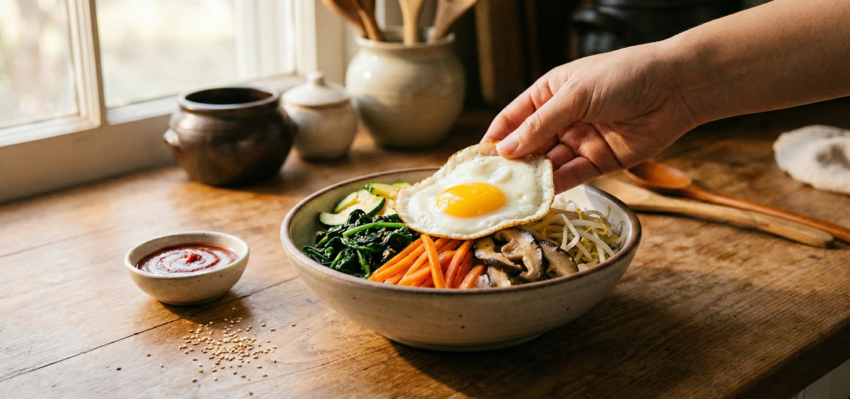
Bibimbap is one of the most iconic dishes from South Korea known for its beautiful presentation balanced nutrients and deep comforting flavors. The word bibimbap means mixed rice and the dish truly reflects that idea. A bowl of warm rice is topped with colorful seasoned vegetables soft sautéed mushrooms spicy gochujang sauce and a perfectly cooked egg. Every bite gives a mix of textures and flavors that feel satisfying and wholesome.
Korean households and restaurants prepare bibimbap in different styles using regional ingredients. No matter how it is made it always looks stunning because of its colorful toppings arranged neatly on top of the rice. When you mix everything together the flavors blend into a delicious combination of spicy savory earthy and fresh notes.
This detailed article will guide you step by step so you can create authentic Korean bibimbap at home in a simple way.
Ingredients You Will Need
For the Rice Bowl
- 2 cups cooked short grain rice
- 1 cup spinach blanched
- 1 carrot julienned
- 1 zucchini julienned
- 1 cup bean sprouts
- 1 cup mushrooms sliced
- 1 egg fried sunny side up
- 1 teaspoon sesame seeds
- 1 teaspoon sesame oil
For the Sauce Gochujang Sauce
- 2 tablespoons gochujang Korean red chilli paste
- 1 tablespoon soy sauce
- 1 tablespoon sesame oil
- 1 tablespoon honey or sugar
- 1 teaspoon vinegar
- 1 teaspoon garlic paste
Step by Step Method to Make Korean Bibimbap
Step 1
Prepare the Vegetables
All vegetables must be cooked separately to maintain their individual flavor and texture.
For spinach
- Blanch in hot water for thirty seconds.
- Squeeze out excess water.
- Season with a little salt and sesame oil.
For carrots
- Sauté lightly in a pan for one minute.
- They should remain slightly crisp.
For zucchini
- Sauté for one minute with a pinch of salt.
For bean sprouts
- Boil for one minute.
- Drain and season with salt and sesame oil.
For mushrooms
- Heat oil in a pan.
- Add mushrooms and cook until soft.
- Add a pinch of salt.
Each vegetable adds color and texture to the final bowl.
Step 2
Prepare the Gochujang Sauce
- In a small bowl mix gochujang soy sauce sesame oil honey vinegar and garlic paste.
- Stir until smooth.
- Taste and adjust sweetness or spice as needed.
This sauce brings the signature Korean flavor to the dish.
Step 3
Cook the Egg
- Heat a little oil in a pan.
- Crack one egg and cook sunny side up.
- The yolk should remain soft because it mixes into the rice later.
Step 4
Assemble the Bibimbap Bowl
- Place warm rice in a deep bowl.
- Arrange all the vegetables around the rice in separate sections.
- Add the cooked mushrooms.
- Place the fried egg in the center.
- Drizzle a little sesame oil on top.
- Add a spoonful of gochujang sauce.
The bowl should look colorful and beautifully arranged before mixing.
Step 5
Serve and Enjoy
Bibimbap is served by mixing everything together before eating.
The warm rice the soft egg and the seasoned vegetables create a harmonious mix of flavors and textures.
Serve with
- Extra gochujang sauce
- Kimchi
- Soup
- Toasted seaweed pieces
Tips for Perfect Korean Bibimbap
- Keep each vegetable lightly seasoned
- Do not overcook vegetables
- Use short grain rice for authentic texture
- Add sesame oil at the end for aroma
- Mix well before eating
- Use fresh vegetables for color and crunch
Variations You Can Try
- Add tofu for a vegan version
- Add chicken beef or prawns for a non vegetarian version
- Replace vegetables with seasonal options
- Use brown rice for a healthier variation
Approximate Nutrition per Serving
Values may vary
- Calories 400 to 520
- Carbohydrates 60g
- Protein 14g
- Fat 14g